One schedule
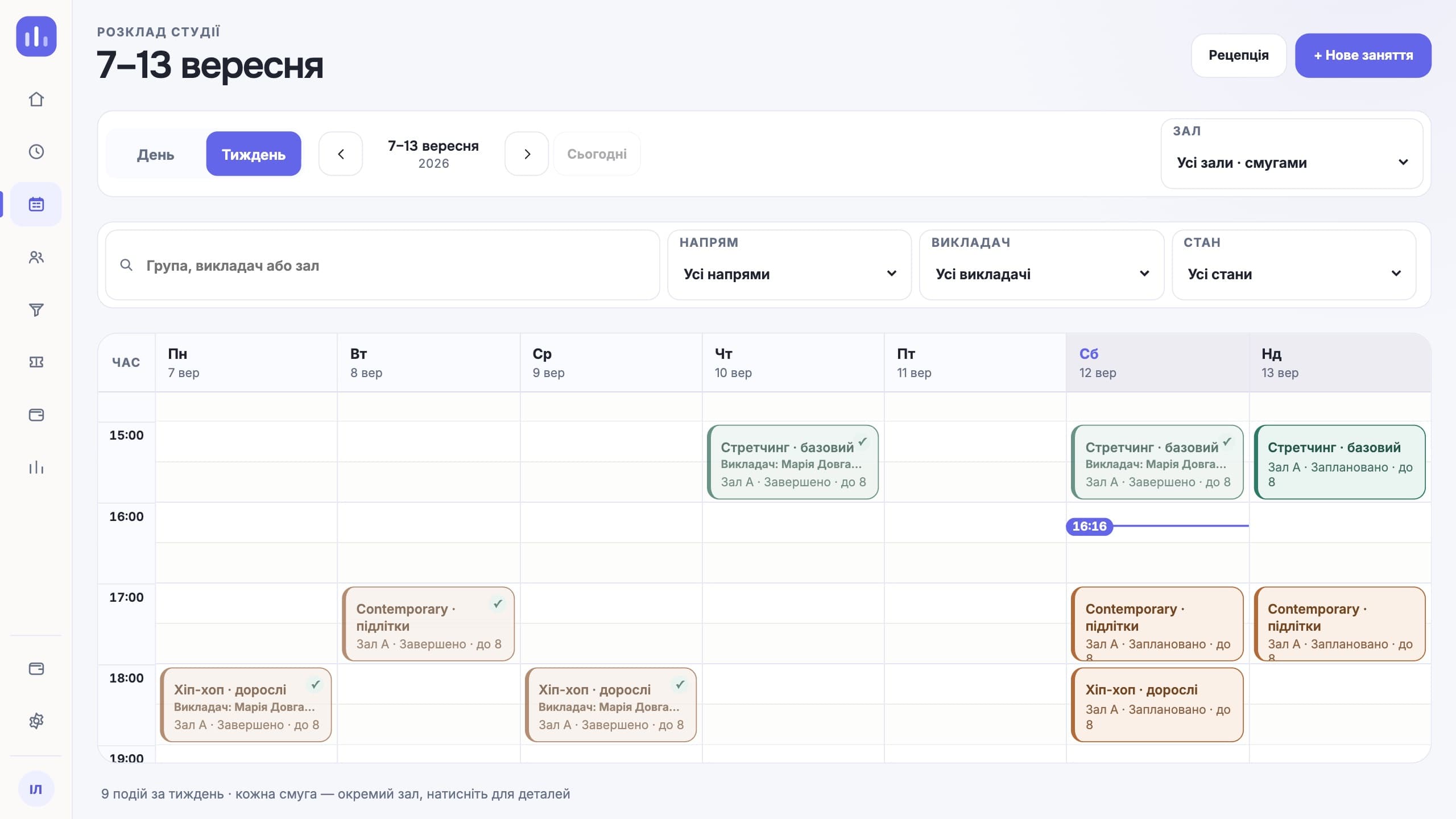
Group and one-to-one sessions are visible together.
ClubBase for fitness studios
Everyday workflows
Group and one-to-one sessions are visible together.
The system deducts the visit and shows when it is time to renew.
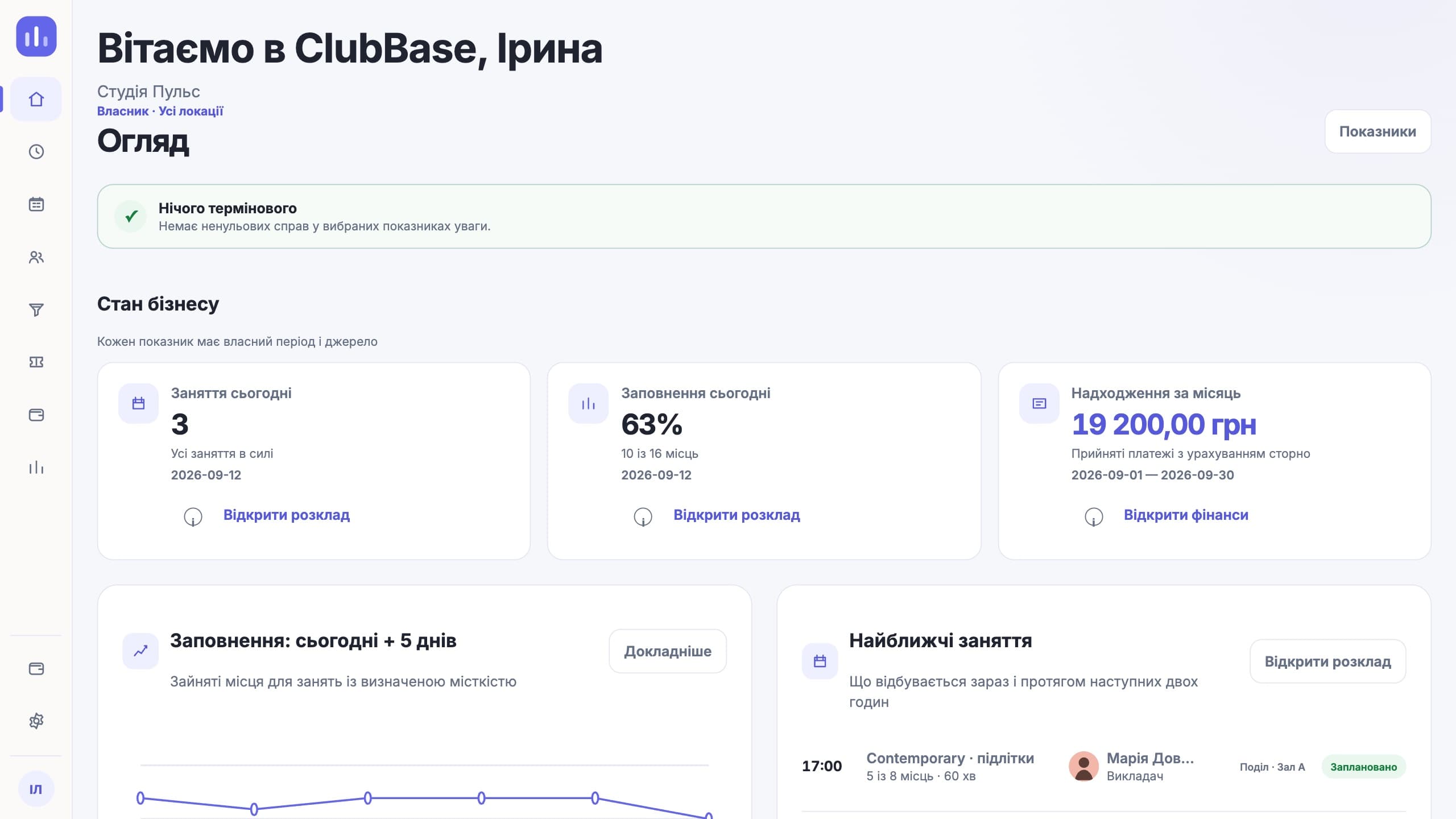
The owner sees each location and the overall summary.
Payments, debts and expenses open down to the source rows.
Features for this type of studio
Looking specifically for class booking? How the online booking software works — groups, capacity, memberships and reminders.
Roles and access
Compares locations and sees outstanding balances.
Handles bookings, class packs and check-ins.
Sees their groups and personal sessions.
Has the schedule, balance and QR code in Telegram.
What people come with
Group and one-to-one sessions live in one schedule, so you see the room’s and the coach’s time together. The system warns about an overlap before you save, not after the client has arrived.
Attendance deducts the visit straight away, and both sides see the balance. The client learns about their last class in advance, not at the front desk.
A debt stays in the client profile and in the financial report from the day it appears. Nobody has to collect it at the end of the month from other people’s reminders.
Access rights, rooms and the summary take the location into account. A front desk admin works with their own location; the owner sees both and the difference between them in one place.
A working day
The first week
A spreadsheet of clients and class pack balances goes into the import. The system shows rows with errors before saving.
Group classes with a limit on places, personal sessions by coach time. A recurring class is created once.
The client checks in with a QR code, the visit is deducted, and the front desk log updates with the same action. It works without internet, too.
After a week you can see room occupancy by hour, debts and how many class packs are running out. From there you have something to work with.
Compared with a generic CRM
A generic CRM is good at taking leads to payment, and after that the client is done as far as it is concerned. In a fitness studio everything starts after the payment: the client attends, skips, freezes, renews. The main object is a class with a time, a room, a coach and a limit on places, not a deal card.
Selling a membership is half the job. After that it has to be deducted visit by visit, its balance shown the same way to the client and the studio, frozen for a holiday and flagged when it is about to run out. A regular CRM sees the payment; a studio needs the pack’s movement day by day.
A coach’s pay depends on the classes held, and sometimes on how many people came. That data exists only in attendance. So pay is calculated from the log, not from the calendar or from a separate spreadsheet someone keeps by hand.
Honestly
Questions about this type of studio
Yes, the class format is stored separately from the schedule.
Yes. Access rights, rooms and the summary take the location into account.
Yes. A debt stays in the client profile and in the financial report.
The system will not let you book an extra person. You can put them on a waitlist and pass the place to them when someone cancels.
Yes. The balance and end date move, and the profile shows when it was frozen and by whom.
The studio sets the pay rules and can treat formats differently. Every amount opens down to the classes it came from.
No. Access rights, rooms and the summary take the location into account; the owner sees the full picture.
A single visit is deducted in the same way and stays in the person’s history. If they later buy a class pack, the profile already has their contacts and past visits.
No. ClubBase handles clients, the schedule, memberships, attendance and money for classes. Stock has to be tracked elsewhere: there is no such module.
The price depends on the number of active clients; the Telegram bot for clients is already included. Current prices are on the pricing page. The first days of access are free, no card required.
Start with your own structure