Groups by age and level
The team and parents can see how sections are organised.
ClubBase for martial arts clubs
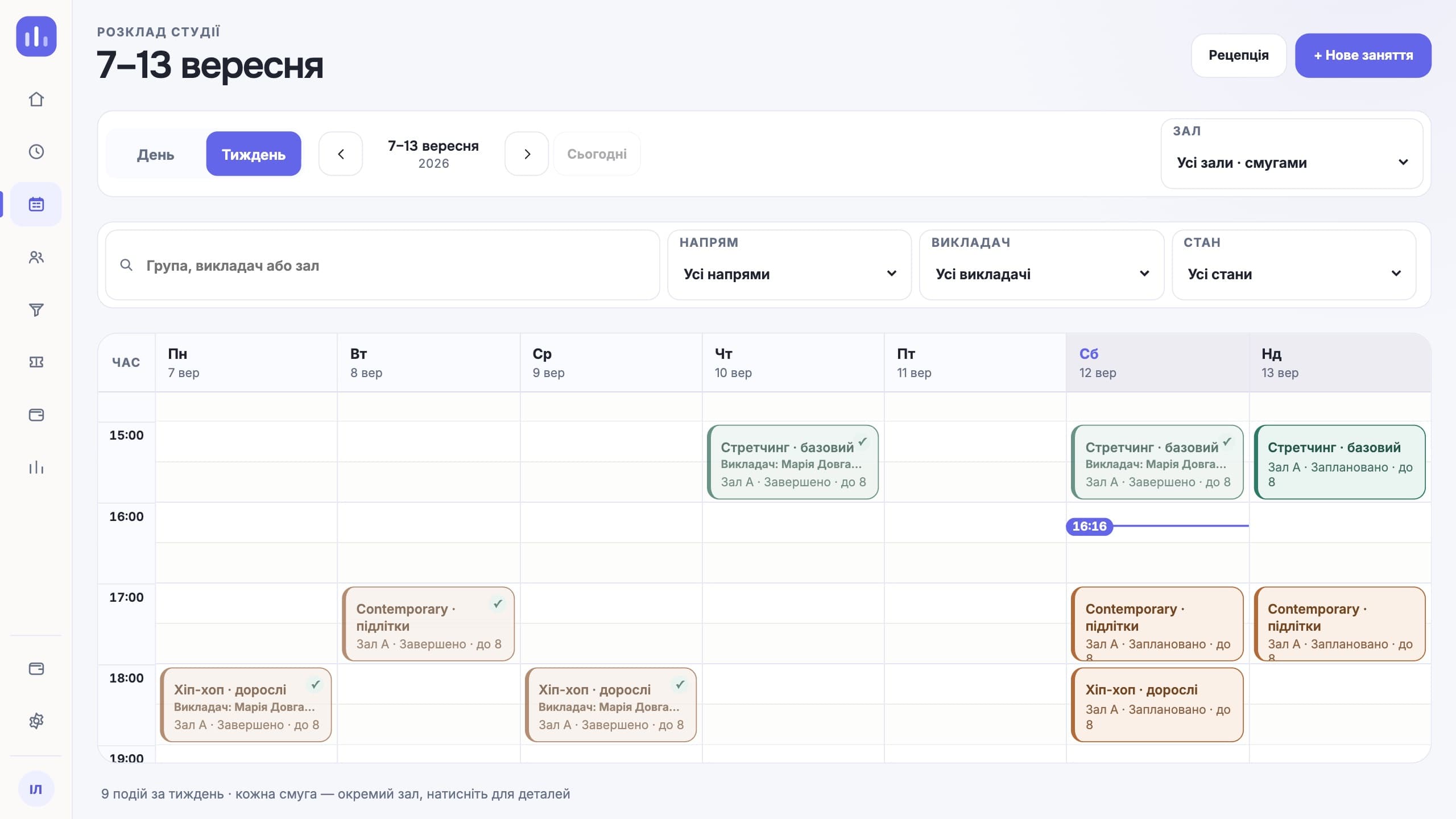
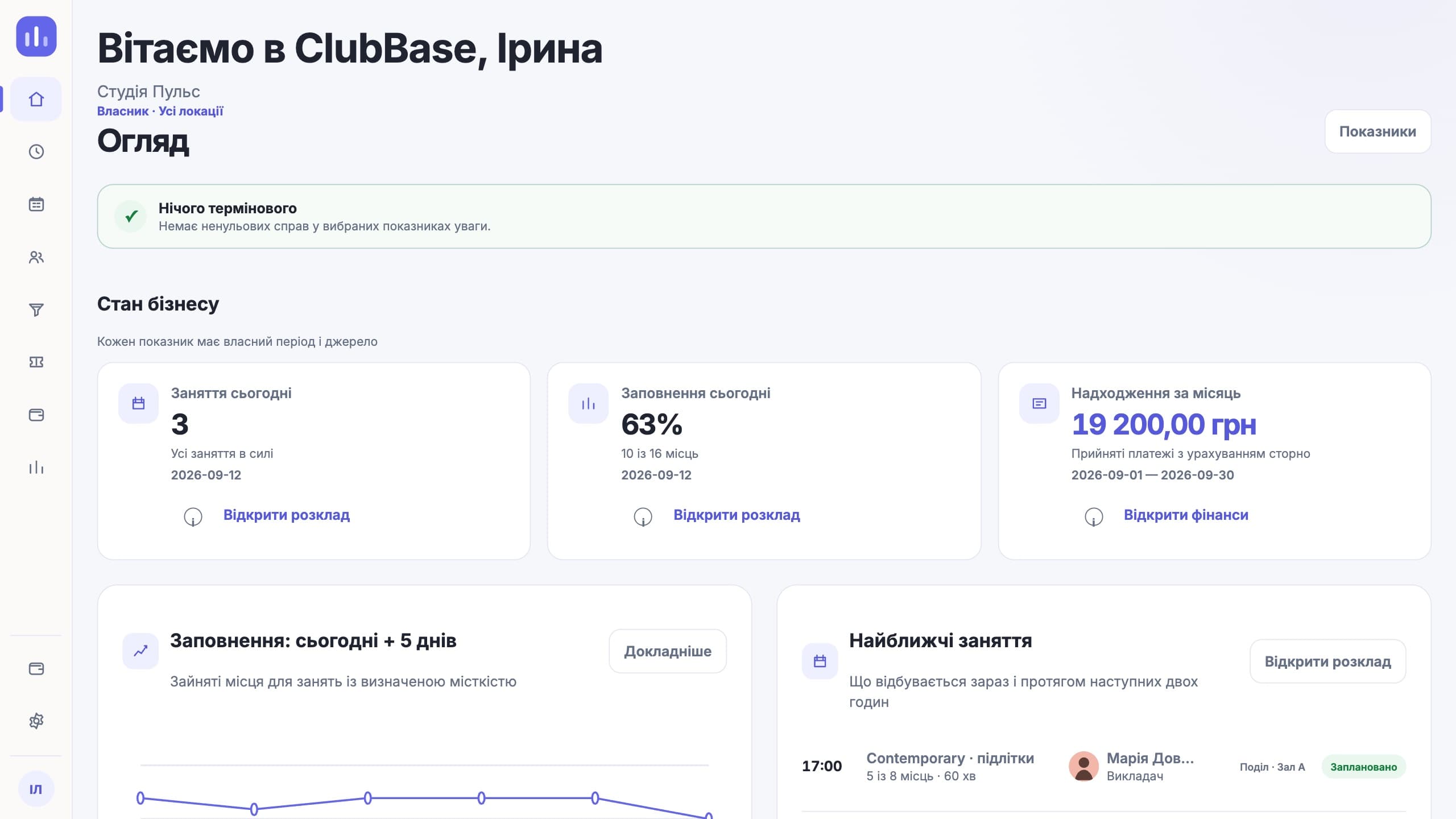
Everyday workflows
The team and parents can see how sections are organised.
The guardian and payer have separate roles next to one person.
A QR or manual check-in updates the log.
The team sees the actual status before the class.
Features for this type of studio
Looking specifically for class booking? How the online booking software works — groups, capacity, memberships and reminders.
Roles and access
Sees groups, cash and debts.
Handles bookings, athletes and payments.
Sees their sections and group lists.
Have the schedule and balance in Telegram.
What people come with
A kids’ beginner group and an adult advanced group can train in the same room on different days. When it is all one spreadsheet list, the coach has to keep the group lists in their head.
The mother’s phone goes into the child’s profile, then a separate row for the mother appears, and a year later it is unclear whom to call. Here the guardian and payer are separate roles next to one person.
A person skips two weeks, then a month, then never comes back. The attendance log shows regularity, so you can act at the second missed class, not when the membership has already gone unrenewed.
The membership and the debt sit side by side in the profile. The front desk sees the actual status before the athlete walks into the room, not after.
A working day
The first week
A spreadsheet of athletes and parents goes into the import. The system shows rows with errors before saving.
Age, level, section and coach. A recurring training session is created once per season.
Each profile gives a personal link to the Telegram bot. Parents see the schedule, the remaining membership balance and the child’s QR code.
After a week you can see who attends steadily, who has started skipping and which groups are short of people. That is the first thing worth working on.
Compared with a generic CRM
A generic CRM sees a person as a contact with a phone number. In a club, one person means an age, a level, a section, a group and a separate payer. You can squeeze this into a deal card, but you will be the one maintaining that setup.
For a CRM a deal is closed after payment. Here the important part starts after that: attendance regularity shows who is about to leave. That data exists only in the attendance log, and a sales pipeline does not have one.
The payment reminder should go to the mother, and the schedule to whoever drives the child. A single "client" field forces you to write the second person into a comment, and in six months nobody will find it there.
Honestly
Questions about this type of studio
No. We do not present this as a ready feature.
Yes. Guardians and the payer are stored as roles.
Age, level and section are separate fields. A kids’ beginner group and an adult advanced group share one schedule and do not get mixed up in reports.
Yes. The attendance log shows regularity, so a drop is visible at the second or third missed class, not when the person has already gone for good.
Yes. A coach sees their schedule and the members of their groups. The club’s finances stay closed to them.
No. ClubBase handles people, the schedule, memberships, attendance and money. Sports results have to be kept elsewhere.
The price depends on the number of active athletes; the Telegram bot for clients is already included. Current prices are on the pricing page. The first days of access are free, no card required.
Start with your own structure