Where studio debts come from
In a spreadsheet a debt exists only while the administrator remembers it. A client paid part of a membership and the rest stayed as a note in a cell. A child came to class after the membership had run out, and the parent said they would pay next time. A newcomer took a single class without paying at the desk. Each of these is small, but over a month they add up to a sum the owner cannot see.
What makes it worse is that a spreadsheet debt has no date. At the end of the month you see the gap between what should have come in and what did. Who owes, how much and since when has to be rebuilt from chat history.
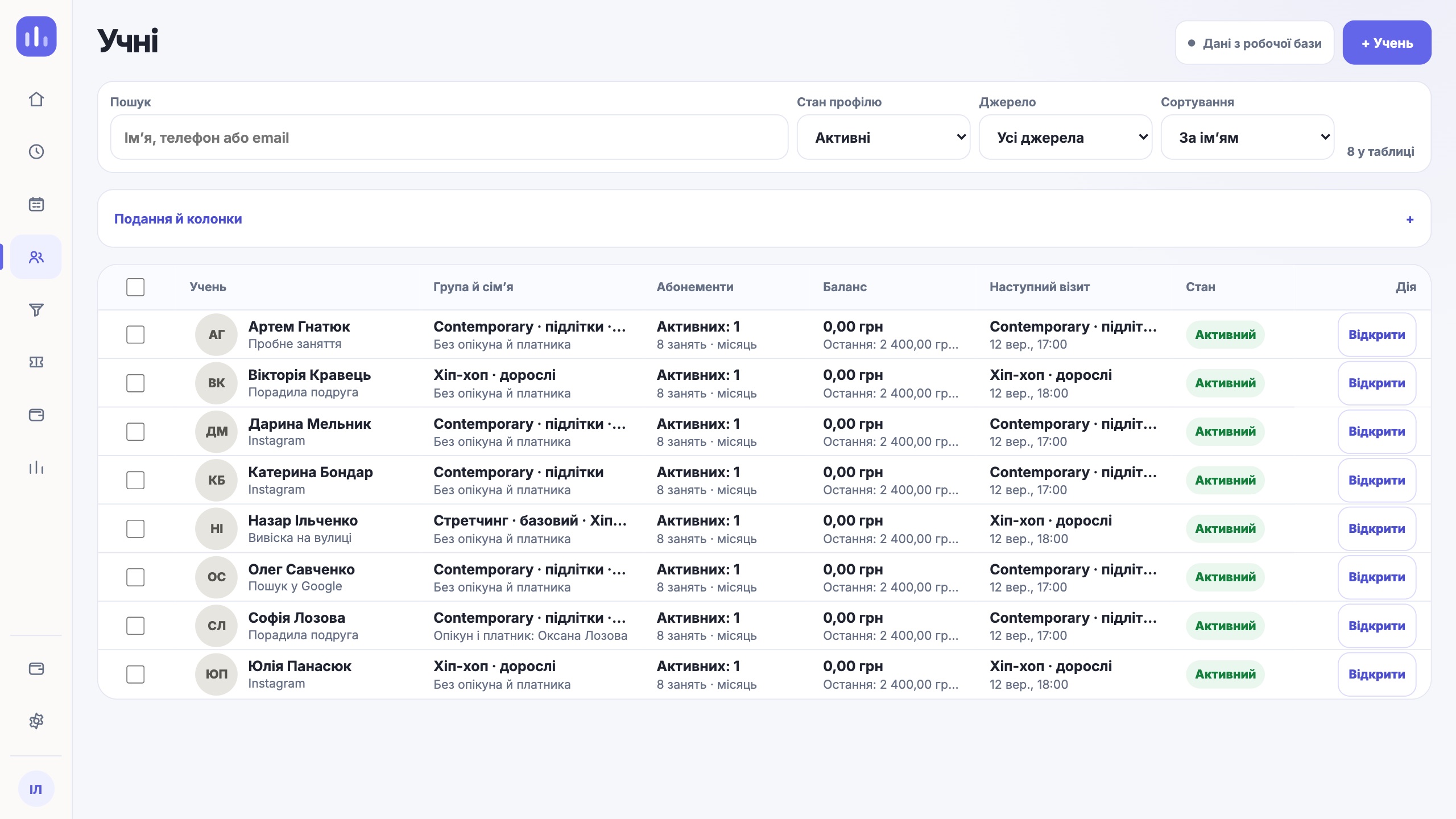
In ClubBase a membership can be paid in parts, and the rest becomes a debt. It stays in the client card and in studio finance from the day it appeared, so nobody has to explain it from memory a month later. How the money section works is described on the payments and debts page.
Membership balance: one number for the studio and the client
Half of all arguments about debt are really about the balance. The client believes two classes are left, the administrator sees zero, and both start scrolling through the attendance log. That argument goes away when the system counts the balance, not a person at the end of a shift.
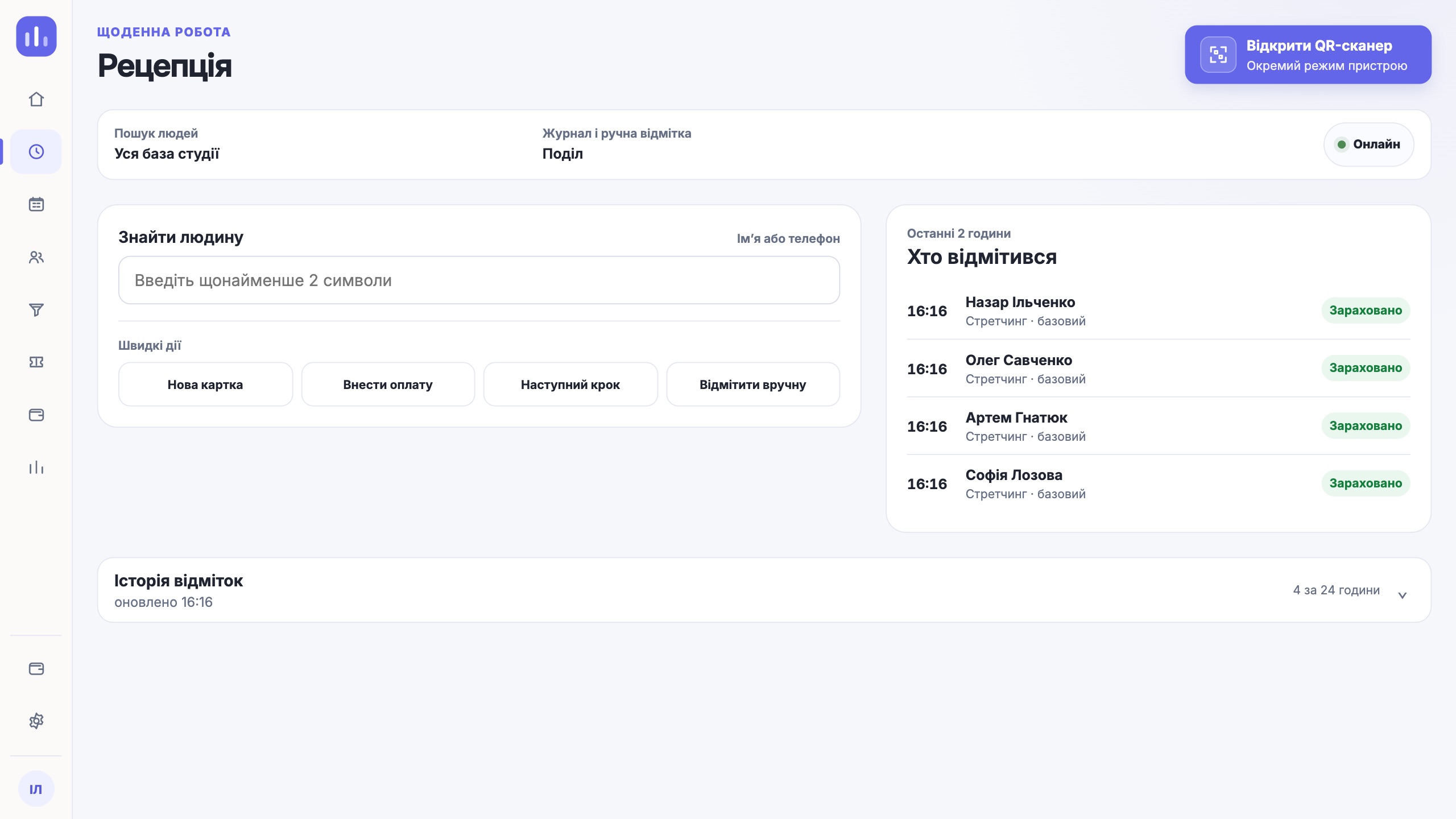
- When a visit is deducted. When the client shows a QR code at the door or the administrator marks them in the class log. Booking a class deducts nothing.
- What the client sees. The balance in Telegram, and it is the same number as in their card in the CRM.
- What a freeze does. The balance and the end date move, and the card shows who set the freeze and when.
- If the client has no Telegram. The administrator books and marks them, and reads the balance from the card.
Membership types, freezes and discounts are covered in the article on membership tracking and on the clients and memberships page.
Who owes: the debt list in finance
The finance section has an open debts block. At the top you see the total and the number of people with debt. Below is a list: name, amount owed and the date of the last payment. If a person has never paid, the list says so.
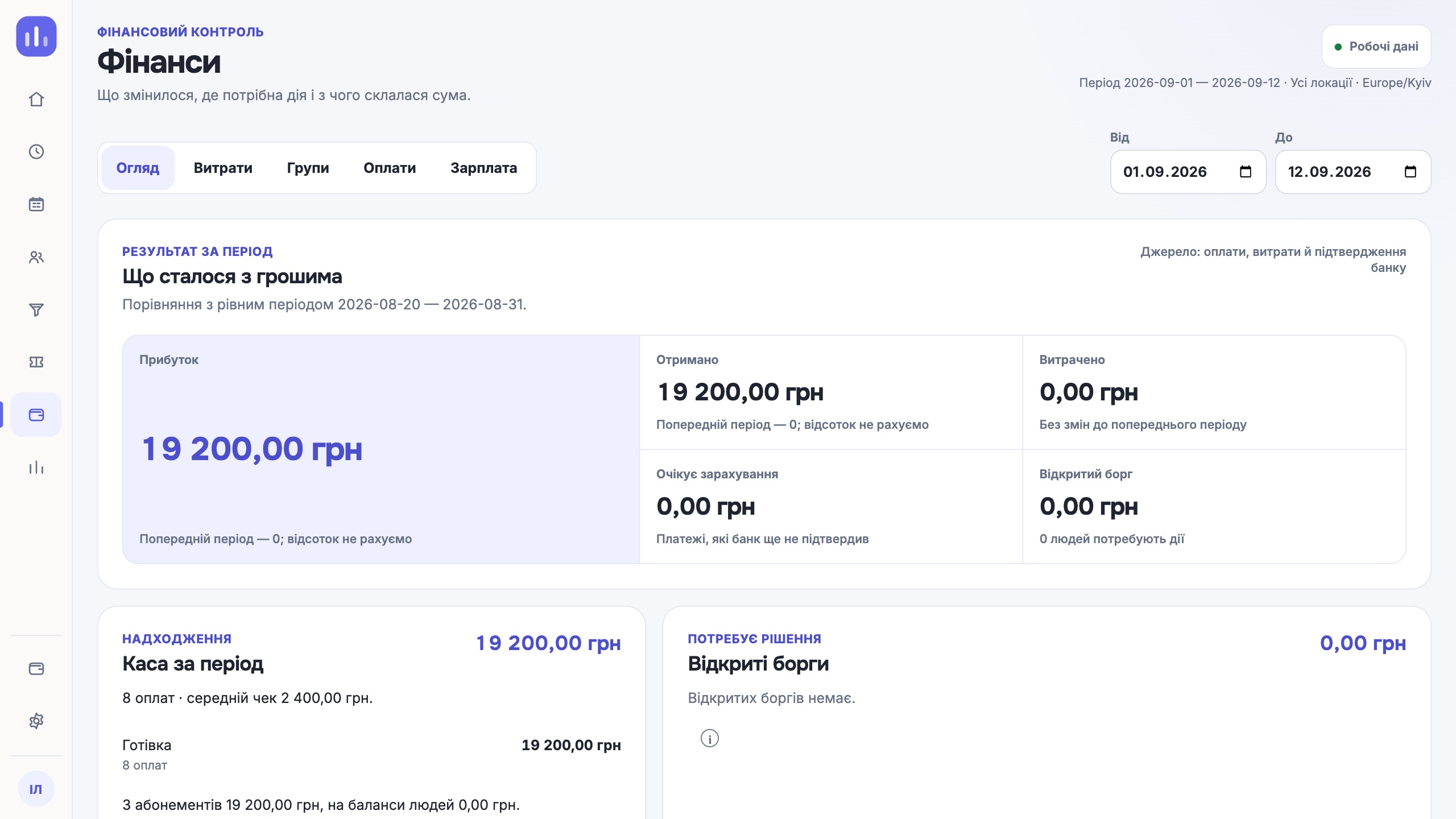
The date of the last payment matters more than the amount. A small debt from someone who paid last week usually closes by itself. The same debt from someone who has not paid for two months is a reason to talk. Under the block you can open the formula behind the total, so the figure can be checked.
When the client brings the money, the administrator records a payment with the purpose of paying off the debt, and the debt in the card goes down. ClubBase records the fact that money was received and how it was paid. The CRM does not run the bank payment. Step-by-step help: how to record a payment and check a debt.
Should a client with debt be let into class
This is the owner’s decision, and it is better made once than left to the administrator at the desk every time. ClubBase settings have a check-in rule for debt with three options.
| Rule | What happens at the door | When studios pick it |
|---|---|---|
| Block check-in | The visit is not counted until a payment is recorded or the debt is cleared | The studio works on prepayment only |
| Allow up to a limit | The person is checked in until the debt passes a limit: an amount or a number of unpaid visits | Regular clients may pay a little later |
| Do not block for debt | Check-in goes through, the debt stays visible in the card and in finance | Payment at the end of the month or by agreement |
The rule is set for the whole studio, and a single location can have its own. Until the owner sets anything, the most cautious option applies: check-in with debt is blocked.
The client learns about a refusal right away. When a QR check-in is declined because of debt, they see a message about the outstanding amount and a request to contact the studio. Self-booking for group classes in Telegram is also open only to clients whose debt is settled. How check-in itself works is described in the article on QR attendance check-in.
Debt that will not be repaid
Some debts will never come in: the person moved, stopped attending, or the sum is too small to call about. If such a debt is simply left alone, it sits in the report for months and hides the real ones.
For this the client card has a debt write-off. It forgives the debt without any money coming in: a team member with the right to manage payments enters the amount and the reason. Visits and earlier payments stay in the history, and the activity log shows who changed what. A year later you can see that the debt did not vanish, it was written off, and why.
A weekly debt check
Debts are easier to close while they are fresh. Six steps once a week are enough.
- Open finance and look at the total of open debts and the number of people.
- Go through the list and note those whose last payment was long ago or never happened.
- Open their cards and compare the debt with the recorded payments and visits.
- Message or call the client while they still remember what it is for.
- When the money arrives, record a payment with the purpose of paying off the debt.
- Write off a debt you decided to forgive and state the reason.
Once a season, review the check-in rule itself. If the number of people with debt grows every week, the limit is probably too high. If the administrator keeps asking for exceptions for regulars, the rule is stricter than the studio needs.
Questions about debts and balances
Can clients see their balance themselves?
Yes, in Telegram. It is the same number as in the CRM card, so answering how many classes are left stops being the administrator’s job.
Can a person with debt be let into class?
That depends on the rule the owner set: block, allow up to a limit, or do not block. The limit is counted as a debt amount or a number of unpaid visits.
Can a client pay off the debt online?
Not yet. The studio takes the money the way it always has and records the payment and its method in the CRM. Online payment by the client in Telegram has not been verified with real funds, so we do not promise it.
What stays in the history after a write-off?
Visits and earlier payments stay where they were. The write-off itself is saved with its amount and reason.
One next step
To see who owes the studio you need an exact membership balance and a dated debt for every person. Set the check-in rule for debt once, and review the debt list in finance every week while the sums are still small.
Try it free